
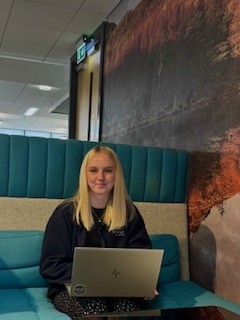
Jamie-leigh Blair
Assistant Quality Advisor at Morgan Sindall Infrastructure
Key Details:
| Current industry | Construction |
|---|---|
| School attended | St. Benedict's Catholic High School |
| College/training attended | Energy Coast UTC |
| Year completed GCSEs | 2020 |
| Favourite lessons at school | Business, Construction/ Engineering, English |
Q&A
— Give a short overview of your career journey after school
I completed my GCSEs at St Benedict’s before progressing to the Energy Coast UTC, where I achieved my A-Levels. I then began a Level 4 Quality Practitioner Apprenticeship with Morgan Sindall, which I have now successfully completed. Recently, I have taken the next step in my development by starting a Level 6 Project Management Degree.
— What do you love about your job?
Engaging with new people every day and building strong working relationships. Travelling to a variety of locations to visit suppliers and broaden my industry understanding. Continuing to develop within my role while also expanding my experience into other areas of the business.
— What piece of advice would you give to young people about finding their best next step?
There are so many paths, careers, and opportunities out there that you might not have even heard of. Stay open, try new things, and don’t put pressure on yourself to have it all figured out right away. Your next step will become clearer as you learn more about what you enjoy and what motivates you.
— What three essential skills do you think have helped you to be successful in your job?
Listening, Aiming High, Teamwork.
— What advice would you give to someone considering working in your industry?
1. Explore the breadth of the industry. You might discover opportunities that suit your strength better than the “traditional” routes. 2. Be prepared for a fast-paced, ever-changing environment. 3. Build strong communication skills early. 4. Don’t be afraid to ask questions. 5. Get comfortable visiting sites and suppliers. 6. Focus on continuous development.
— What is the best piece of advice you have been given that has helped you on your career journey?
The best advice I’ve been given is not to be afraid of asking questions. Asking questions has helped me build confidence, deepen my understanding, and progress much quicker than I would have on my own.